Predictive Analytics for Business: From Data to Strategic Decisions
Every day, your company generates data: sales, orders, customer interactions, stock movements, cash statements. Yet much of that information remains underused, locked in spreadsheets or static reports. Predictive analytics for business changes the game: instead of simply noting what has happened, it uses statistical methods and machine learning to estimate future events and guide your decisions before it is too late.
Why Predictive Analytics Is Becoming Key for Small Businesses and SMEs
The promise is concrete. With predictive analytics, a company can sharpen its sales forecasts, anticipate a late payment, limit stockouts or detect the risk of a key employee leaving. Decisions rest on well-founded estimates rather than on intuition alone.
The context is pushing in this direction. Markets move fast, digital competition is intensifying, and the volume of data coming from ERPs, CRMs, e-commerce platforms and business applications keeps growing. In Morocco as internationally, companies that put their data to work get ahead of those that rely on intuition alone.
What is different today is accessibility. Using predictive analytics is no longer reserved for large multinationals. Specialist firms such as UnzipTech, based in Fès and offering artificial intelligence, intelligent process automation and predictive analytics services, enable small businesses and SMEs to launch pilot projects suited to their size.
In this article, we explain what predictive analytics actually involves, which models suit which use cases, how to steer your revenue with these techniques, and what approach to follow to go from an idea to a first operational result.
What Is Predictive Analytics? A Clear Definition With Immediate Examples
What exactly is predictive analytics? It is a discipline that combines historical data, statistical methods and machine learning algorithms to anticipate future outcomes. It differs from descriptive analytics, which explains what happened, and from diagnostic analytics, which seeks to understand why something occurred. Predictive analytics answers the question: "what is likely to happen?"
Here are some immediate examples by sector:
-
Retail / e-commerce: estimate revenue for the coming months, anticipate stockouts by product reference, identify customers at risk of churn.
-
Light industry / manufacturing: predictive maintenance of equipment, production forecasts based on demand, estimated delivery times.
-
Vehicle or property rental: predict demand by season, anticipate periods of heavy use, adapt pricing and availability.
-
B2B services: estimate the likelihood that a client cancels a subscription, anticipate late payments, assess the likelihood of a response to a marketing campaign.
Predictive analytics helps anticipate potential problems in many sectors, from logistics to human resources. The implementation steps include data collection, cleaning and modeling: a cycle that always starts from a precise business question, moves through structuring the available data, choosing the right models and validating the results, and ends with operational deployment (alerts, dashboards, automation).
From Business Intelligence to Predictive Analytics: What Is the Difference for an Executive?
Many companies already have business intelligence tools: dashboards, monthly reports, tracking indicators. These solutions are valuable for understanding the past, but they do not answer the question "what next?" Here is the distinction in practice:
| Approach | What it does | Concrete example |
|---|---|---|
| Descriptive BI | Shows what happened | "Bookings dropped sharply in November" |
| Diagnostic analytics | Explains why | "The drop coincides with the end of an advertising campaign" |
| Predictive analytics | Estimates what will happen | "Next November, bookings should fall in this segment; here are the customers most exposed" |
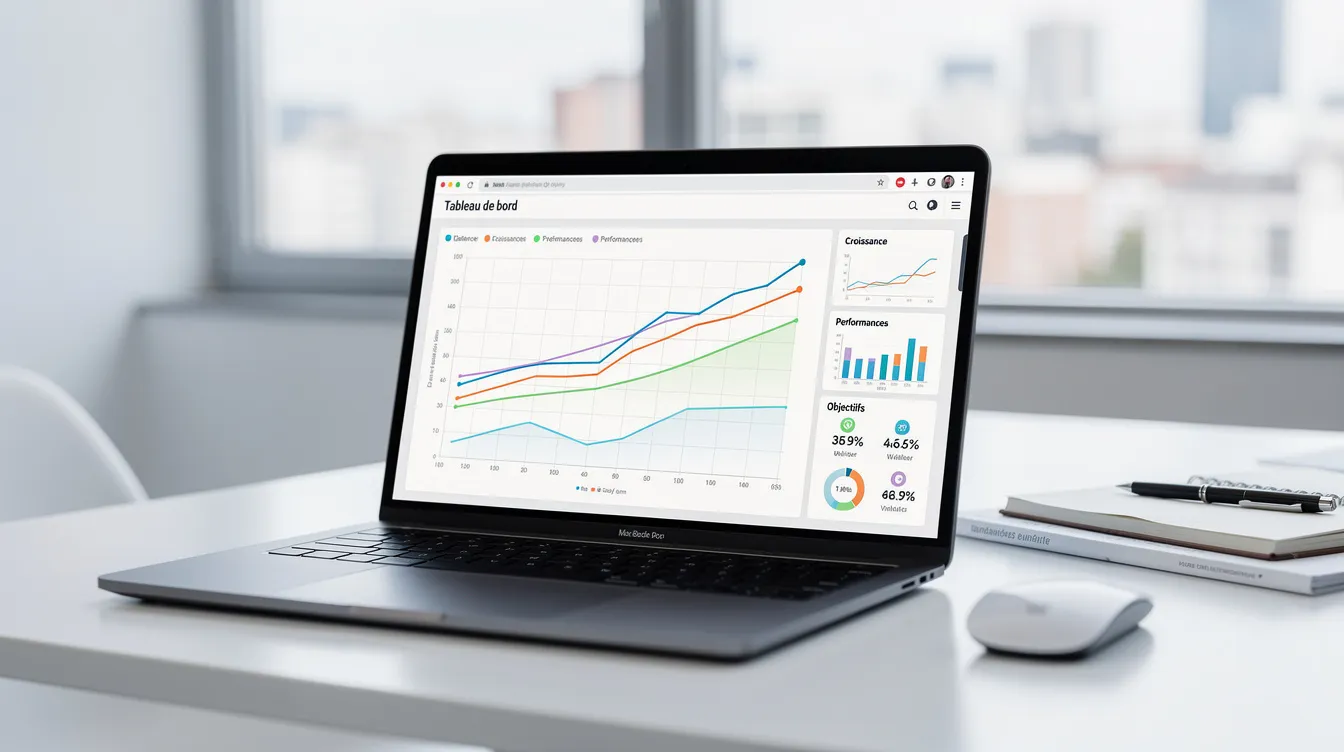
BI tools increasingly include prediction and scoring functions, which makes it possible to combine both approaches. For example, a dashboard can display both sales history and a simulation of the effect of a price increase or a new acquisition channel on your revenue.
Advice for executives: approach these topics as business use cases ("reduce my unpaid invoices", "optimize my stock on a given product") rather than asking for "AI" in general. The business question drives the technology, not the other way around.
The Main Types of Predictive Models Useful in Business
Several families of models sit behind predictive analytics. You do not need to master the mathematical formulas: what matters is understanding what each type brings to your organization.
-
Classification: answering a yes/no question. Will this customer pay late? Is this employee likely to leave? A rental platform like RentalMe, a Moroccan rental marketplace and an UnzipTech product, could for example classify bookings by their probability of cancellation.
-
Regression: predicting a continuous value. What will the order volume be next month? What revenue should you expect from a product line?
-
Time series: these models estimate demand from historical data, taking seasonality and trends into account. Ideal for monthly or daily planning.
-
Clustering: segmenting your customers into groups with similar behavior, without defining the categories in advance. Useful for marketing targeting or personalizing offers.
-
Anomaly detection: spotting what falls outside the ordinary. Fraud detection analyzes unusual behavior, while predictive maintenance uses machine data to anticipate breakdowns.
The choice of model always depends on the business question and the data available. A specialist partner like UnzipTech generally selects and combines several techniques rather than relying on a single "miracle" algorithm. The goal is to produce reliable, actionable estimates for the company's decision-makers.

Predictive Analytics Use Cases by Business Function
Predictive analytics transforms decision-making in every function of the company. Here are the most common use cases.
Sales and marketing. Lead scoring assigns each prospect a probability of converting, so salespeople can focus their efforts on the most promising opportunities. Predictive analytics sharpens marketing campaigns by targeting the customers most likely to respond, whether by email, online advertising or field action. Product recommendations in e-commerce draw on past purchases to increase basket size.
Operations and logistics. Demand forecasting by point of sale or by city helps size inventory and the supply chain, limiting overstock and stockouts. Predictive analytics also helps anticipate bottlenecks or equipment failures.
Finance and risk management. Short-term cash flow forecasts help secure cash flows. Modeling the risk of late payment by customer makes it possible to adjust commercial terms. Analyzing unusual activity patterns in expenses helps spot anomalies.
Human resources. Predictive analytics helps anticipate certain employee behaviors, notably the risk of departure. It contributes to forecasting recruitment needs and optimizing schedules in fluctuating environments such as a call center or a rental fleet.
Rental platforms. For an agency managing vehicles, real estate or equipment, predictive analytics makes it possible to anticipate periods of strong demand, adjust prices according to seasons and local events, and estimate average rental duration to optimize turnover and fleet availability.
How to Use Predictive Analytics to Steer Revenue
This is often the trigger for a predictive analytics project: steering revenue better. Here is what that looks like in practice.
Sales forecasts serve as the basis for the overall budget. A model calibrated on your historical data, your past promotions and the seasonality of your market helps set realistic targets, adjust stock and prioritize high-potential customer segments.
With predictive analytics, it becomes possible to detect in advance a risk of falling revenue on a product line or in a region. Negative trends are spotted before they become visible in conventional reports, which leaves time to react: adjust a campaign, reposition an offer, strengthen a channel.
Scenario simulation completes the picture: what happens if you launch a promotion, hire a salesperson, open a new online channel? Estimating the likely effect on revenue lets you choose the most promising scenario and direct efforts toward what really generates value, in margin and not just in volume. The profitability of each customer or product can be modeled to concentrate resources on the most effective levers.
Prerequisites: Data, Organization and Decision Culture
Before implementing any predictive analytics project, certain prerequisites deserve careful checking.
-
Data: having usable history in your existing tools (ERP, CRM, rental software, e-commerce platform, spreadsheets). Data quality directly affects the results. Consistent customer identifiers, product references and dates, and unified sources to avoid silos: these are the basics to secure.
-
Organization: define a clear objective before starting. Appoint a business sponsor (general management, sales manager, HR manager) and formulate the problem to solve, for example reducing the average payment delay, improving the conversion rate or anticipating turnover. Success indicators are defined upfront.
-
Culture: encourage decision-making based on data rather than on intuition alone. Accept that results are probabilistic: estimates, not certainties. This is an essential change of mindset to gain a real advantage from these solutions.
-
Skills: you do not need an in-house data science expert to get started. The company can rely on a specialist provider like UnzipTech, while naming an internal point person who can understand the results and relay them to business teams. Digital transformation also involves this gradual build-up of skills.
Project Approach: From Idea to First Pilot With UnzipTech
The idea is not to transform everything at once, but to start with a limited pilot project with measurable results. Here is the approach in six steps.
-
Scoping: a listening and needs-analysis workshop with UnzipTech to clarify the priority business question. For example: "better forecast bookings in high season" or "reduce stockouts across several stores". Scope, objective and indicators are defined together.
-
Data audit: analysis of existing systems (ERP, CRM, website, booking platform, spreadsheets) and identification of usable datasets. Checks on quality, consistency and availability.
-
Design and mockups: co-building mockups of predictive dashboards (screens, charts, alerts), then validating them with business stakeholders.
-
Agile model development: short iterations to test several models, compare their performance and adjust variables, with regular check-ins to incorporate business feedback.
-
Delivery, training and adoption: deployment of the first version in the tool used day to day. Forecasts can be delivered as a file or integrated into a dashboard or web application. Team training and user documentation handover.
-
Follow-up and continuous improvement: support after delivery, adjustments based on feedback, and a maintenance and support contract if the company wishes.

Main Challenges of Predictive Analytics and How to Manage Them
Every predictive analytics project comes with challenges. It is better to know them so you can manage them from the start.
-
Data quality: missing, inconsistent or poorly formatted data undermines the reliability of models. Simple actions: harmonize formats, define entry rules, remove duplicates. Starting with imperfect data is acceptable, provided you plan to improve it.
-
Bias: if the history covers only one type of customer or an atypical period, forecasts will be biased. The solution: systematically compare results with business knowledge and involve several profiles in the verification.
-
Privacy and security: customer and HR data are sensitive. It is essential to control access, choose an architecture (cloud or on-premises) suited to the company's requirements, and protect information at every stage.
-
Interpretation: a model is only valuable if the people making decisions understand it. Favor clear visualizations (probabilities, scenarios, visual alerts) over complex equations. The benefits of AI in software development now make it possible to build interfaces that any executive can read.
-
Model maintenance: changes in markets, customer behavior and teams make models gradually less accurate. They must be updated regularly. UnzipTech addresses this as part of its maintenance and support contracts.
Examples of Predictive Scenarios for Small Businesses, SMEs and Rental Platforms
To make this article more concrete, here are four generic scenarios illustrating the variety of applications.
Retail and e-commerce. Imagine a distribution SME facing both costly overstock and frequent stockouts on several references. A weekly demand forecasting model by reference can recommend order quantities suited to each warehouse, for better product availability and less waste.
Vehicle or property rental. An agency using a platform like RentalMe wants to anticipate demand by city and by vehicle type. Predictive analytics can help it adjust its available fleet and its prices according to seasons and local events.
B2B services. A service company receives many inbound leads but wastes time on unproductive follow-ups. Predictive opportunity scoring, based on conversion history and contact profiles, lets it concentrate calls on the prospects most likely to sign.
Human resources. An SME notices high turnover in certain critical roles. A simple model highlights the correlated factors (seniority, contract type, workload) and helps management target its retention actions on facts rather than impressions.

Choosing a Partner for Your Predictive Analytics Project: Focus on UnzipTech
The success of a predictive analytics project depends as much on business understanding as on mastery of the technology. It is essential to work with a partner who combines both.
UnzipTech is a company based in Fès, specializing in artificial intelligence (AI model integration, intelligent process automation, predictive analytics), web development, mobile applications, custom software (ERP, CRM, business tools), IT & digital consulting and SaaS solutions. It supports small businesses, SMEs and large companies in Morocco and internationally.
Its working method follows four clear steps: listening and needs analysis, design and validation of mockups, agile development with regular check-ins, then delivery, training and follow-up. UnzipTech offers a free personalized quote after analyzing the need, with payment generally split into several phases and the option of a maintenance and support contract. With each delivery, teams receive training and user documentation.
Ready to explore what predictive analytics can bring to your business? Discover UnzipTech's AI and predictive analytics services or contact the team directly for an initial conversation.
FAQ: Predictive Analytics for Business
Is predictive analytics suitable for a small business? Yes, provided you target a specific use case and start with a pilot project. Small businesses and SMEs can achieve concrete results without mobilizing disproportionate resources.
How much data is needed to use predictive analytics? The richer the history, the better. But you can often start with the data already available in your existing tools (ERP, CRM, tracking files). What matters is consistency and quality, not raw quantity.
Do I need to hire a data scientist? Not necessarily. A partner like UnzipTech can handle the whole technical side (modeling, development, deployment) while your company provides the essential business knowledge. An internal point person is enough to serve as the link.
What is the difference between predictive and prescriptive analytics? Predictive analytics estimates what is likely to happen. Prescriptive analytics goes further by recommending what to do in response to those forecasts. The two are complementary: one sheds light on the likely future, the other on the action to take.
What are the first concrete steps to launch a project? Here is a simple four-point approach:
-
Identify a priority business problem (stock, sales, unpaid invoices, turnover...).
-
Check the available data sources and how they are currently used.
-
Contact a provider for an initial scoping workshop.
-
Launch a limited pilot, measure the results, then expand gradually.
Predictive analytics is not an end in itself, but a tool serving your strategy. By combining it with good knowledge of your market and a data-driven decision culture, you turn your dormant data into a lever for growth and risk control. The first step is often the simplest: ask the right business question, then give yourself the means to answer it.